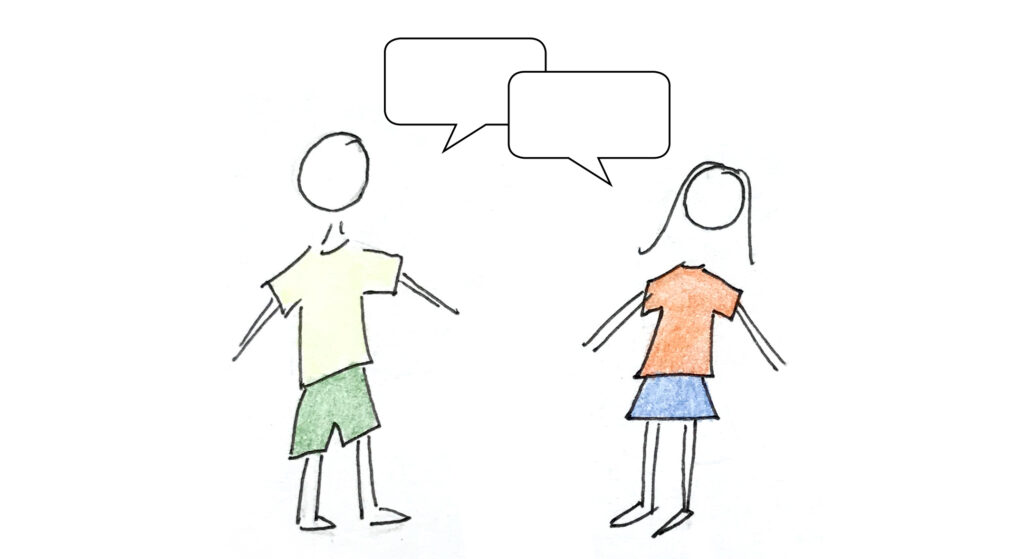
When was the last time that you truly listened to another person?
When was the last time that you felt truly heard by another person?
Listening to another person is powerful, yet it is one of the hardest things to do and see others doing these days. We seem to have lost the ability to perform this action and instead have become very good at making excuses – “I’m busy,” “I’m stressed,” “I don’t have time” – to avoid engaging with another real person at a deep level.
Poor listening manifests in several ways. The more obvious one is when we notice that the other person is distracted or checking their phone; or they change topics abruptly. Other times, as soon as we start listening what the other person says, we start offering suggestions and solutions. This is also a sign that we aren’t truly listening. Deep listening is not about always trying to help and solve problems; it is about holding space – showing the other person that they are not alone. Present moment awareness is essential to go beyond simple hearing and focus on conscious listening.
Why is listening so important?
It is the seed for authentic, impactful conversation. Good conversations lead to change – personal and societal. Through conversation we also connect with other humans, share experiences, and build relationships. As the study reported in “The Good Life” book explains, social relationships are the single most determining factor for happiness. Having a lot of friends or a large family is not as important as the quality of those relationships. Quality has the greatest influence: fun, supportive relationships improve well-being, while untrustworthy ones destroy it.
In other words, deep listening strengthens conversations, which can help bring people closer and improve the quality of relationships – also intensifying positive emotions. Margaret Wheatley suggests five principles to improve the depth, authenticity, and richness of conversation:
- Acknowledge one another as equals: Engage with each other as peers – we are all humans!, not as roles.
- Stay curious about each other: Be humble; we can always learn something new from another person. If they say something you disagree or don’t like, seek understanding. Where are they coming from? What is their life story that led them to think that way?
- Recognize that we need each other’s help to become better listeners: Slow down. Make time to engage with the other person and truly listen. If you are in a rush, agree on a different time to connect and follow up.
- Slow down so we have time to think and reflect: By engaging in conversation we can discover new perspectives, share ideas, and get inspired.
- Expect to be messy at times: Listening, and being curious and open minded doesn’t mean that conversation will be smooth and all smiles. We are humans! What matters is that every person has a voice, and that their voices are heard and their views are respected. And to end in a better place than where it started: maybe new connections emerged, maybe we learned new things, maybe we got inspired, maybe what we said helped the other person.
Like other human skills, both listening and conversing require practice and patience – and time – to get it right. It also requires trust. Through practice, we get closer to our nature and grow.
—
Waldinger, R., & Schulz, M. (2023). The good life: Lessons from the world’s longest scientific study of happiness. Simon and Schuster.
Wheatley, M. (2002). Turning to one another: Simple conversations to restore hope to the future. Berrett-Koehler Publishers
You must be logged in to post a comment.