
Last month, I attended the Inner Development Goals (IDGs) summit in Stockholm, Sweden. I came across the IDGs in May and I immediately connected with their aim and purpose: promote individual inner growth to build a healthier society. The IDGs initiative was first introduced in 2020 at the Stockholm School of Economics in response to society’s incapacity to reach the 2030 Sustainability Development Goals (SDGs). One year later, the framework was co-created by a group of 1000+ scientists, experts, and HR & Sustainability professionals. The IDG framework is composed by 23 competences grouped under five dimensions – Being, Thinking, Relating, Collaborating, Acting – that should be integrated into everything people do in order to be better prepared to tackle complex societal issues and generate change in the world.
Most of the competences are well known and practiced at different levels. But the framework provides vocabulary to support the need for paying attention to soft competences and emotional learning, rather than critical thinking or technological skills alone. Furthermore, it articulates in a structured manner specific competences that can lead to inner development and healthier societies, centering in the individual, the mind, and mental health.
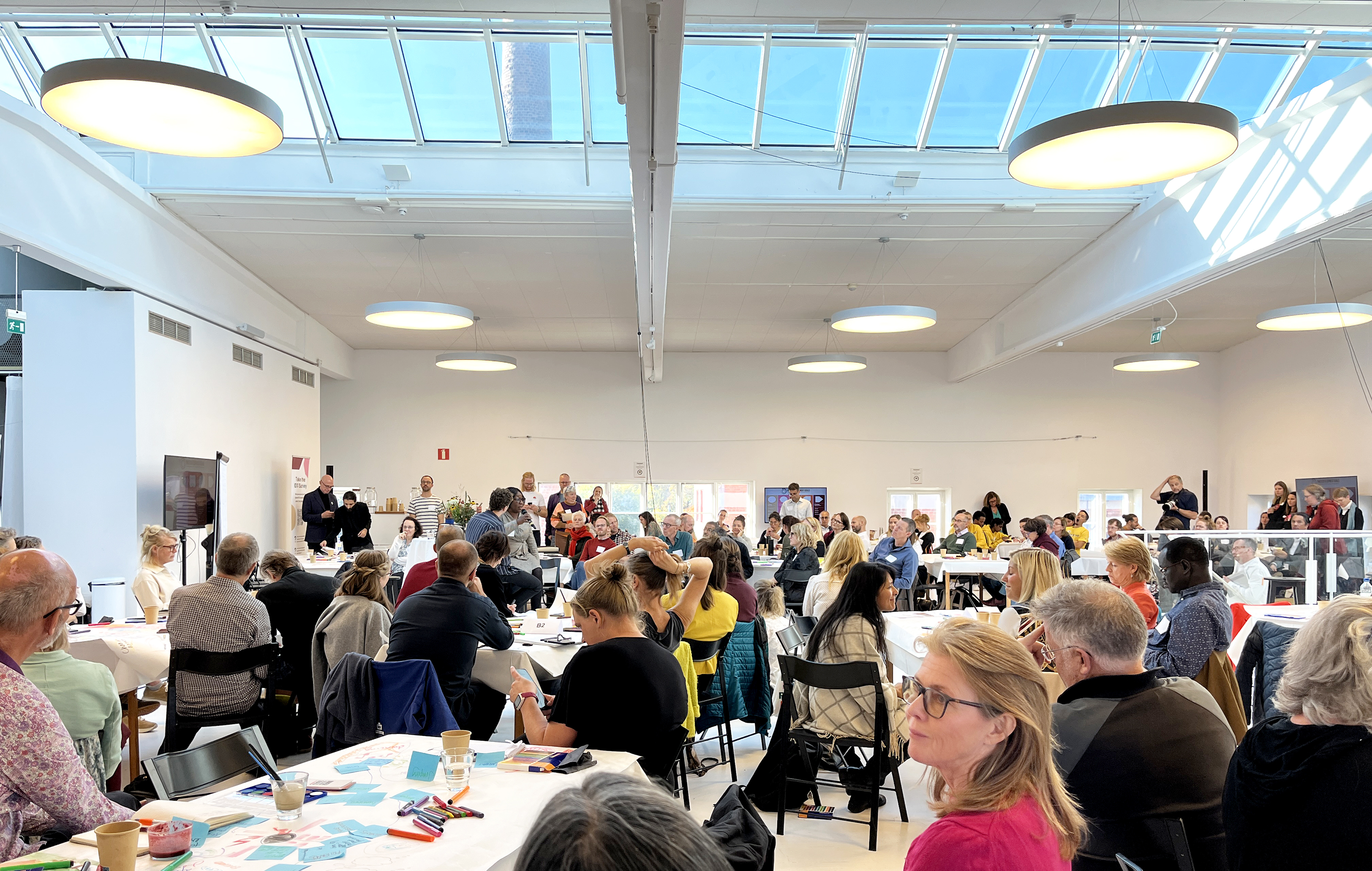
People came from all over the world and multiple sectors – academia, private and non-profit organizations, individuals, leaders; all wanting to learn more about how to adopt and implement the IDGs in their realities. It was invigorating to be with more than 1500 people talking about the role of wellbeing for living a purposeful and meaningful life without having to make the case for it or having to talk about artificial intelligence.
Many people have been implementing the IDG framework in a linear way. For instance, schools in Costa Rica and Colombia have been teaching these dimensions and competences for a few years. Some of them use the same terminology and structure, while others have adapted the framework to the specifics of their students’ needs. Despite these efforts, the void in higher education – at both students and faculty levels – persists. Not many universities have significantly changed their pedagogical approaches to integrate the IDGs. Most changes are in primary and secondary schools.
Love & Happiness, the way forward
DAY 1. One of the highlights was Jennifer Garvey Berger’s talk, who is the CEO of Cultivating Leadership and an excellent speaker. She argued that before learning any skills, we need to create the right conditions. To her, love or genuine positive regard, in-person relationships, and compassion are the pillars to build a strong sense of self; which would lead to a healthy, caring society. In times when the most common message is about the importance of AI, data, technology, and leadership, it was refreshing to hear such a different view on what individuals and society need. The need for social connections and doing things collectively as well as for learning how to hold another person was also emphasized in her talk.
Similarly, Tho Ha Vinh’s – former Program Director of the Gross National Happiness Centre in Bhutan – talk highlighted the need to enhance quality of life and well-being, individually and globally. He describes three steps to begin this journey:
- Knowing how to live in harmony and care about oneself
- Learning how to care about others and society
- Learning how to care about our planet
To achieve these goals, a change of consciousness at a systemic level is needed to bring new structures that will support the implementation of the qualities described in the IDGs. Changes in the education system should come first, as we should start with and within young people – the foundation of society. Structural changes are needed to foster a different mindset focused on inner growth and nurturing balance between inner and outer worlds. Education should move the focus from content to process and mindset –this would also address current concerns about AI replacing people. For instance, a radical change in assessment criteria that re-thinks the way we evaluate students could be the first step. For such a change to succeed educators should change their mindset too. They should first take the time to look inwards. Soft competences cannot be explained, rather educators have to embody them.
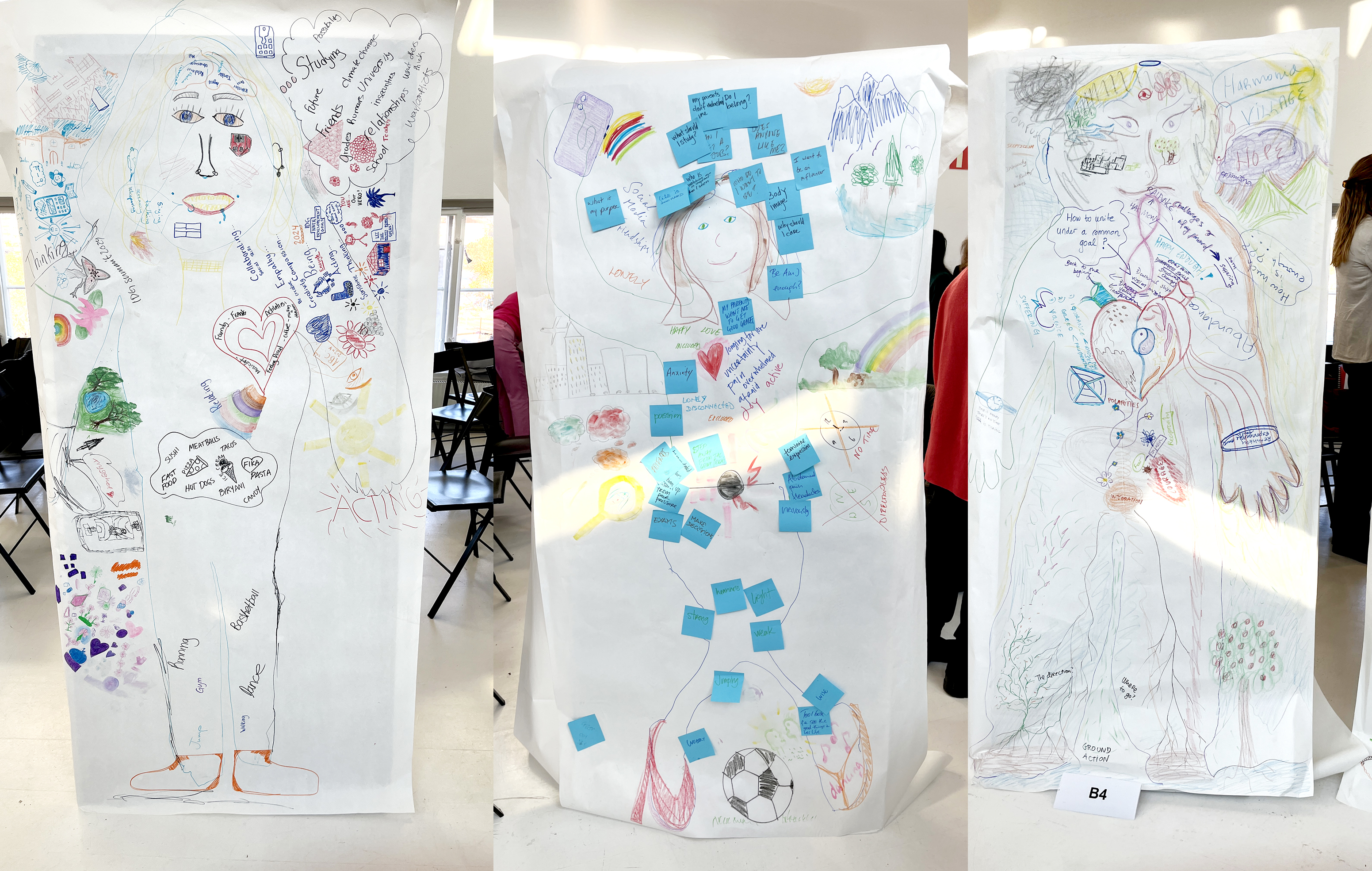
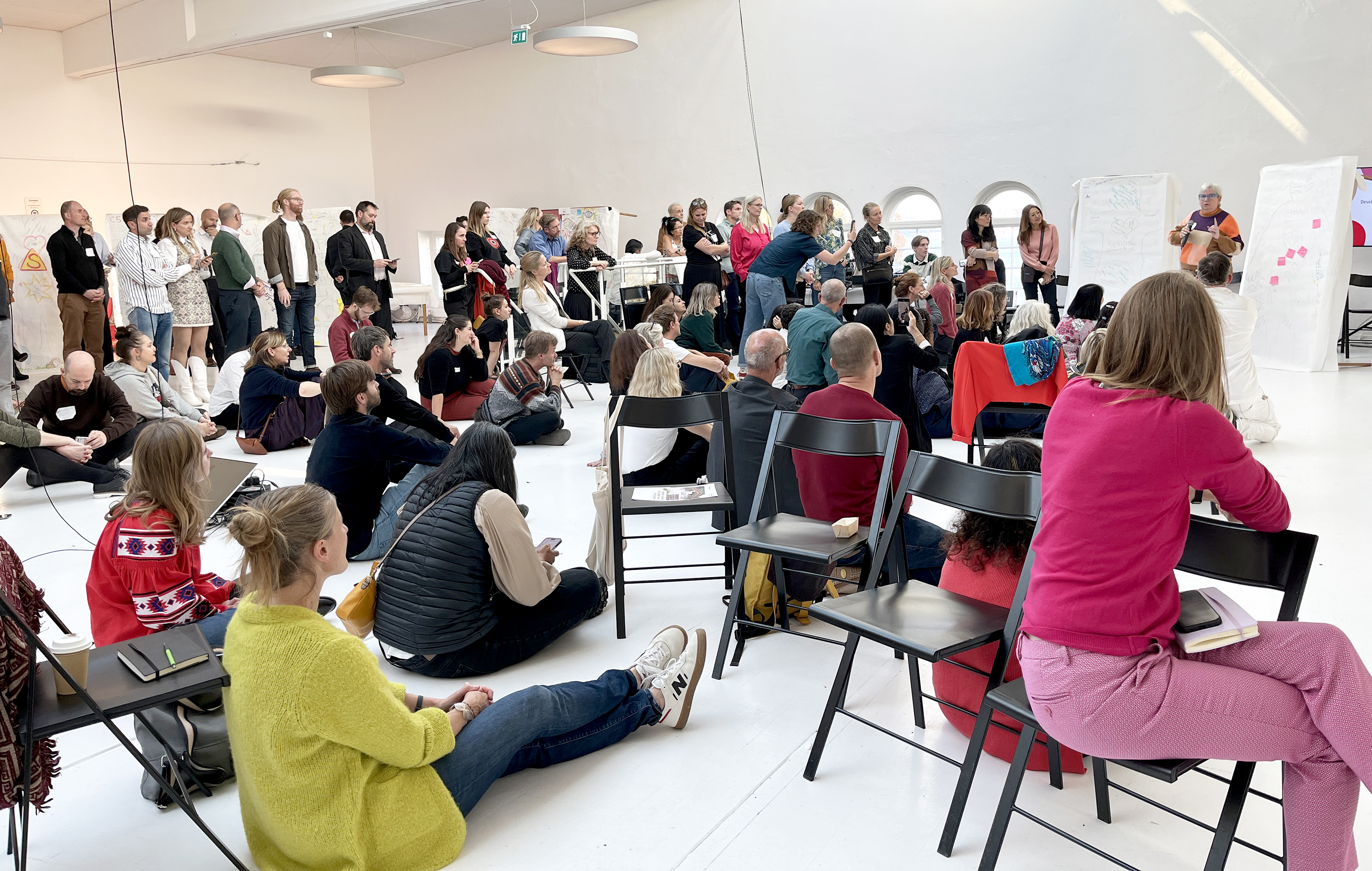
DAY 2. For this day I joined Track 4 – Education. Through case study presentations, discussion, and one main visioning activity, we explored how the IDG framework could be integrated into multiple settings worldwide. The message was clear: there is an urgent need for caring and compassion as well as for social emotional learning skills. Both Tho Ha Vinh’s panel and Angela Owusu Ansah’s talk, who is Provost and Professor at Ashesi University (Ghana), shed light on the privilege for being in a classroom. Angela stressed that, in her university, students who are able to be there feel a sense of duty to make the most of their time. Professors are there to teach them, but they have to want to learn too. In the US and some European countries, many students take for granted the fact that they can attend higher education.
Next steps
Overall, the Summit and specifically these three speakers conveyed powerful messages that help reinforce the importance of my work on imagination and its role in students’ (and society’s) well-being and happiness. The implementation of frameworks like the IDGs in higher education requires a change in mindset of all parties involved in the system – staff, faculty and students; changing from solely focusing on outer change to a focus on inner growth. This should start from rethinking pedagogical approaches and learning assessment criteria, shifting the focus from technical skills – like reading, programming, data analysis – to happiness and wellbeing.
Leave a Reply