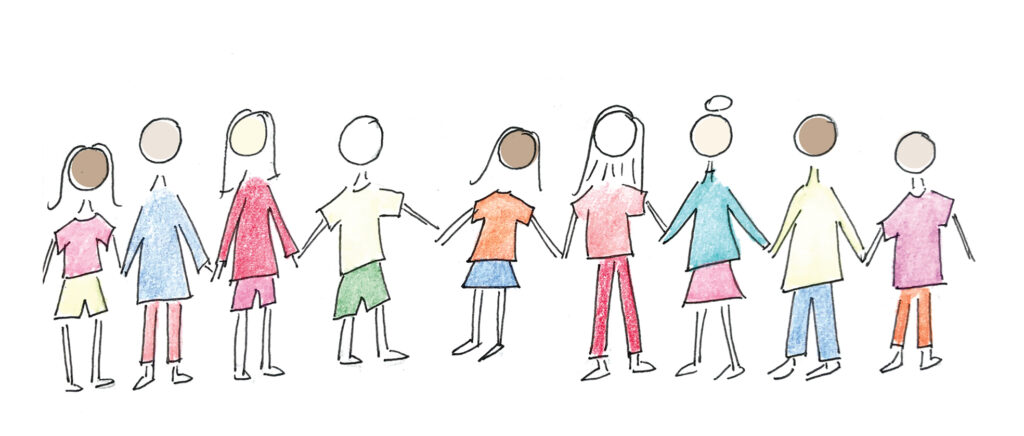
When the future is collectively reimagined the vision represents everyone’s needs and voices, and involves greater balance and sustainability for people and planet. To achieve this outcome, we need to interweave practices, perspectives, and views from multiple cultures, sectors, and disciplines into the conversations. In the futures community, pluralism — the integrated practice of multiple ways of knowing, doing, and being — is slowly becoming crucial to create transformative visions. Pluralistic approaches involve collaborations between stakeholders from diverse backgrounds (academia, industry, government), each with their own knowledge, views, and methods working together to co-produce shared visions.
To work with this approach in real-world settings, enhancement of both the individual and group ability to minimize resistance and disagreements, and manage conflicts is a priority. This is why inner transformation has become a prerequisite for anyone working with co-imagination; that is, to shift their inner worlds and mindsets to create space for alternative or contradictory views. Through inner work we can intentionally look inwards and develop self-awareness of our own unconscious internal barriers, which act as “blind spots” in any efforts to create social change.
If our internal barriers or “passengers” are not kept in check, we tend to dismiss opposing arguments, inaccurately frame the scope of a system, or explore the possibility space too narrowly, significantly impacting engagements throughout a project or a conversation. Building on Otto Scharmer and Adam Yukelson (2015, p. 35), the quality of collective imagination “depends on the quality of awareness from which the players in that system operate.”
Human work, not self-help
Reimagining new systems starts with individual human work. This type of work does not refer to traditional psychology, comforting self-help, or only personal optimization, rather it focuses on helping us confront our complicity in perpetuating current systems and preparing us for societal transitions. The goal is to identify and label specific thought patterns and beliefs that shape our actions in the outer world. Vanessa Andreotti refers to this work using the “bus metaphor” to understand and get familiar with our “passengers.” Through self-discovery and self-exploration, we can slow down and uncover our own inherited patterns, blind spots, biases, and complexities that limit our worldviews.
Strengthening our human skills is the first step of this work. For example, we can focus on building our emotional intelligence to become more in control of our actions and on practicing deep listening to pay more attention to everyone’s contributions. Developing an optimistic mindset will help us steer the conversation towards areas where we could have an impact (rather than only focus on those we cannot), and expand our productive imagination to generate more radical ideas about the future, rather than recycle old ones.
Any human skill can be shaped with training at any age. This is why, through human work, anyone can strengthen their human skills and be better equipped to create spaces where everyone feels seen and heard, that lead to transformative visions and collective change.
You must be logged in to post a comment.