Category: design process
-
How to add rigour to Design Practice
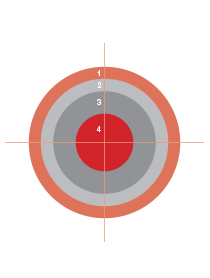
The traditional understanding of design as merely a practice-led artistic discipline has evolved into a more holistic view including social, ethical and cultural aspects. Arguably, design is a discipline: It has principles, methodologies and theoretical frameworks which designers use to solve problems and generate solutions. Traditionally, designers’ learning process has been linked to studios, open…
-
The affective experience behind problem-solving
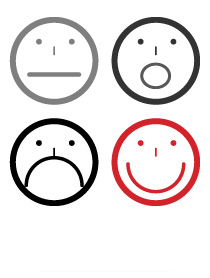
Let’s start from the end: We finally have solved that problem we have been working on for a while. How did we do it? Rationally, first we made sense of the problem-situation. Then to understand that situation we learnt new knowledge, made decisions, and sought for relevant information, until we identified an appropriate solution and…
-
The role of expertise in information design problem-solving

In a previous post I provided an overview of 10 key factors involved in the way information designers solve problems, this post gives a more detailed explanation of how some of those factors, particularly experience and expertise, actually work in practice. According to how information designers make sense of a problem situation, they can fit…
-
10 factors to information design problem-solving

(Information) designers approach problems and go through the problem-solving process using diverse methods, but eventually they all arrive to (different degrees of successful) solutions. Some designers seem to go through the conceptual design process with no apparent method, others take longer or need many iterative stages to decide how to start the process, and others…
-
Terminologies can be confusing
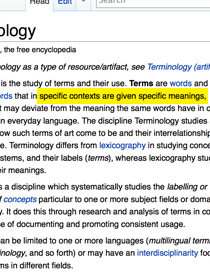
Sometimes, terminologies can obscure rather than shed light. Cross-disciplinary projects are the perfect scenario to illustrate this point as to achieve common understanding among all parties involved could be a challenge. Ambiguous understanding is likely to happen when we see a problem situation solely through our own eyes and fail to realise that although other…
-
the functional art: The Book
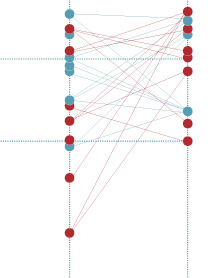
When I first heard of the functional art (Cairo, 2012), I asked myself: What makes this book different from the many other information graphics books which are currently out there? At the beginning, the word ‘functional’ caught my attention as it was in line with my practice approach and research interests. Then, during the Malofiej…
-
When people interact with information
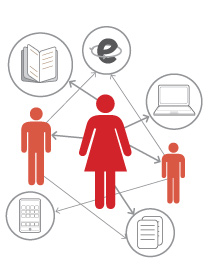
Software, intelligent devices and machines are constantly being developed to assist people’s everyday actions and help them solve problems, from simple tasks like writing, reading, shopping online or booking flights to more complex ones, such as online banking (best invention ever) and medical related analyses. While these innovations help us save time and quite a…
-
A closer view to creative thinking

How designers think or how the creative thinking and problem-solving processes work have been subjects of several studies (Goldschmidt, 1990; Cross et al., 1996; among others) involving a wide range of disciplines and fields from cognition, psychology, visual thinking to design research. Particularly, every time I need to write or think, I can easily be…
-
From print to digital design
Two years ago, Mark Porter’s talk at CIDAG conference added some interesting insights to the on going print-digital media debate. In particular, Porter (2010) pointed out four key technological milestones in the communication media industry: print, Internet, mobile and tablet devices. Overall, his talk described the characteristics of each medium and functions, and it made…
-
Visual thinking tools
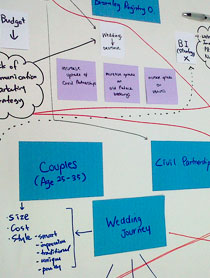
Information designers often use visual thinking tools to enhance understanding of complex projects, and manage high amounts of data. Visual thinking or visual perception is defined as thinking through visual processing and using the part of the brain that is emotional and creative to organise information in an intuitive and simultaneous way. This visual approach…
-
Research methods for information design

Information design is a user-centered discipline. In the context of this discipline, the user (i.e., target audience, users) is someone who uses an (information) object, a service or a system in the framework of an activity in order to carry out a task. This means that conceptual and design decisions should be made according to…
-
A week full of information graphics

This year I was pleased to attend the Malofiej Infographic World Summit and conferences. It was an honour to have been invited as judge and speaker to this special 20th edition. Overall six intense days, thousand of stories, crazy weather, tones of food, amazing people, loads of learning experiences and reflections. I will share some…
You must be logged in to post a comment.