Category: design process
-
Design Thinking for Art & Design Educators
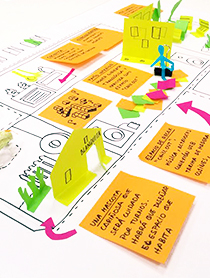
Last week I was pleased to go all the way to Soria in Spain to teach a three-day workshop on design thinking and team dynamics to the educators of Escuela de Arte y Superior de Design (EASD – Art & Design School). Soria is located two and half hours away from Madrid and is the capital of the…
-
The Missing “Why”

Either if you are an experienced designer (e.g. have been working in practice for over 15 years) or if you have just graduated, you most likely make design decisions largely based on either your intuition (“I just know”), your experience (“This works well many times before”) or, more recently, users’ feedback (“this option is much…
-
Design Education 3.0: the unknown unknowns

The three short-films ‘Teaching Teaching & Understanding Understanding’ reflect the changes that higher education and, thus, educators have been going through in the last 30 years to better equip students to successfully deal with real-life problems. A couple of years ago in a talk at NYU, Prof. John Zimmerman also spoke about this shift in education presenting ways to reform and…
-
A (more) complete picture of Design

In the last 15 years, design education has dramatically changed. Generally speaking, at the beginning of 2000s, design education was pretty much the job of art and design schools, and mostly had a learning-by-doing approach, involving hands-on studio-based assignments. It was rare to find a design course heavy on “lecture” format classes, unpacking the design process, or…
-
New challenges of Design education

Designers who have been involved in the design community for more than 15 years should have noticed how much the role of design has changed, moving from being merely an artistic activity to being an activity that ‘makes everything possible’. Traditionally, designers’ most frequent jobs have involved making things look nice (or nicer), creating or improving brand identities, translating…
-
An (Even) Deeper Dive into Conceptual Design
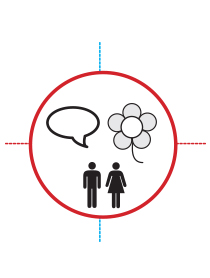
Many blog posts ago, I provided a closer look to conceptual design, preceded by an extensive discussion about the information architecture model (IAM) involved in this same part of the design process. Mostly, though, these two posts provided insights on tasks and activities involved in the analysis, simplification, and organisation of content, and key resulting…
-
User Studies Matter: A True Story

Recently, I bought a 13” MacBook Pro Retina Display laptop. While the processes of buying and setting up the machine went very smoothly, I encountered an unexpected problem: find a sleeve for the laptop. Exploratory research. Initially, I searched online in Amazon for sleeves, and found a variety of designs for 13” laptops. So, in…
-
Looking ahead: Design Practitioners-Researchers

“The Dancing Traffic Light” project (2014) is an example of applied research. The company Smart created an interactive crossing light to increase the number of pedestrians waiting for the light to change at intersections. The project reflects an understanding of the problem, the context and the audience’s needs. The solution is creative and engaging, and…
-
The Elephant of Design Education

A few weeks ago, I attended an excellent talk by Jonathan Zimmerman as part of NYU Center for the Advancement of Teaching. The talk was based on research about the evolution of undergraduate teaching in the United States, presenting key characteristics of various periods until now, and mostly within the context of history, humanities and…
-
Adopting a Team Approach

Watching the FIFA World Cup made me realise the key role of each member in a team to have good performances and successful results. In a football match, most of the time, we only see eleven players running up and down the field, but more individuals integrate a football team. Although less visible to the…
-
Information Designers’ learning process
The aim of information designers is to get to the bottom of a problem and find the most appropriate solution. Constructing deep understanding of each situation is essential to achieve that goal, and develop high quality effective outcomes. In a previous post, I briefly explained the learning process we go through in order to gain…
-
Constructing deep understanding
Information designers make sense of situations. To achieve that goal, they first need to gain an understanding of those situations. Poor understanding results in ineffective outcomes that fail in communicating a message with clarity. To ensure the creation of well-conceived solutions, at the very beginning of a new project, information designers aim to construct an…
You must be logged in to post a comment.