Author: sheilapontis
-
Making sense of information (visual) practices II
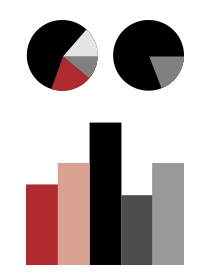
Are information design, data visualisation, and visual analytics the same fields? Do they have similar or different goals? Who practices what? What are their processes? What is the best software to visualise data? These are very frequent questions which are often the central topic of blog posts, twitter threads, discussions, Q&A, and regular conversation related…
-
A (more) complete picture of Design

In the last 15 years, design education has dramatically changed. Generally speaking, at the beginning of 2000s, design education was pretty much the job of art and design schools, and mostly had a learning-by-doing approach, involving hands-on studio-based assignments. It was rare to find a design course heavy on “lecture” format classes, unpacking the design process, or…
-
Bridging Information Design Theory & Practice!
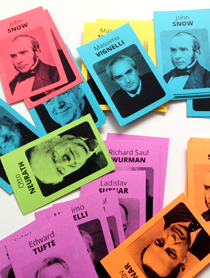
On Tuesday, Sense (my business partner and myself) organised the first Information Design Meet up event of 2016 at General Assembly New York City. Around 40 information designers, UX designers, visual thinkers, data visualisers and designers among other professionals participated in the event. We created interactive posters to trigger discussion on key aspects of information design, cards…
-
A day full of information graphics
Last week, I flew all the way to The Netherlands to speak at Infographic Conference’16, which, like every year for the last nine editions, took place in Zeist, a town very near Amsterdam. Similar to Malofiej, this conference is mostly focused on information graphics, and between 250 to 300 professionals and students with various backgrounds–and ranging from senior data…
-
New challenges of Design education

Designers who have been involved in the design community for more than 15 years should have noticed how much the role of design has changed, moving from being merely an artistic activity to being an activity that ‘makes everything possible’. Traditionally, designers’ most frequent jobs have involved making things look nice (or nicer), creating or improving brand identities, translating…
-
Information Design: Who, What & Why Event!
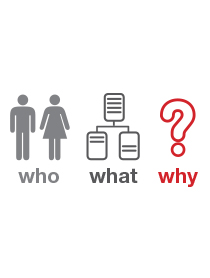
Next month, the first Information Design NYC Meetup event of 2016 will take place. Information designers have been trying to define this field, determining its boundaries and describing the different forms that it can take. However, information design still remains unclear, meaning different things to different people. This first event will be an interactive talk/mixer focused on…
-
Six approaches to visualising complexity
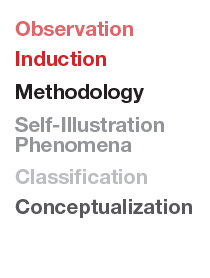
As information designers, we often create visual representations of meaning to make hard-to-understand information (e.g. scientific information, highly technical, unknown) more accessible to a wider audience. When well-conceived, these visualisations translate complexity into a simpler way to communicate a key message. Visualisations also help understand patterns and trends represented in large and rich datasets. Broadly, the visualisation process consists of extracting meaning…
-
How can information design support sensemaking cognitive activities

Sometimes, making sense of data* can be challenging. Data is often perceived this way when a data set is too big or too complex. This indicates that size (small/big) and nature (simple/complex) are frequent issues that can influence the sensemaking process. In these cases, why is data hard to make sense of? Size. Not surprisingly, having loads…
-
Visual reasoning through information design

The visual communication of complex or less known topics (e.g. science, medicine, mathematics) in simpler and clearer ways appeals to users and readers’ visual reasoning. Visual reasoning is the process of both analysing information presented in visual form (e.g. pictures, diagrams, drawings) and solving problems based on visual logic combining verbal, mathematical and visual analysis. As with other types of reasoning,…
-
Be a more creative problem-solver: Unlearn what you know

Creativity and innovation have become common place. But, paradoxically, there seems to be great confusion around both terms to the extent that ‘definitions about these terms vary widely’ (Kaufman and Sternberg, 2010). In some cases, creativity and innovation are used almost interchangeably (Berns, 2008; Seeling, 2015), while in others creativity and innovation are clearly described as different terms. This lack of clarity and,…
-
Improve your info management & conceptual design skills – Help test MapCI Cards!

I started my information design practice in the editorial world creating diagrams, information graphics, and information panels. In this context, I frequently encountered unintelligible and cluttered information design outputs: intended messages were not clearly communicated or were hard to understand. These ineffective outputs had major structural problems (e.g. display irrelevant information) and basic mistakes (e.g. ineffective colour use), but also reflected designers’ poor content understanding and…
-
Changing times for information design
Earlier this month, I attended Vision Plus 15 at Birmingham City University, the information design conference organised by IIID and IDA. The core topic of the conference was ‘information + design = performance’. During the two days of the conference, this topic was discussed on 26 talks thematically grouped into eight different angles, including wayfinding, ways to improve…
You must be logged in to post a comment.