Author: sheilapontis
-
An Introduction to Design Research in Valencia (Spain)
Last week I enjoyed a few days in Spain teaching design research to teachers from the Escola D’Art i Superior de Disseny de Valencia (EASD). Around 80 teachers and experienced professionals from Graphic Design, Product Design, Textile Design, Fashion Design, Photography and Art attended the three sessions of the course: Session 1: What is design…
-
Urban Visual Inconsistencies

Earlier today I was walking around the old town in Valencia, where I’m teaching a course, and found a very interesting situation captured in the above photo. I walked out from the train station and something caught my attention, something was off. I had the same feeling as when reading an ill-conceived infographic or paying…
-
The Power of Information

Much has been written about the current information age, how we are information overloaded, and have access to tonnes of data and information everywhere, and how all that information is making us feel anxious and confused. At the same time, little has been written about those situations in which the lack of information can trigger…
-
Adopting a Team Approach

Watching the FIFA World Cup made me realise the key role of each member in a team to have good performances and successful results. In a football match, most of the time, we only see eleven players running up and down the field, but more individuals integrate a football team. Although less visible to the…
-
Making research more accesible
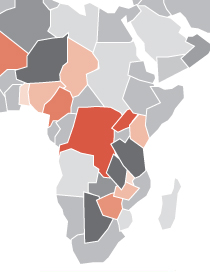
NYU Wagner hosts a series of talks as part of the 2014 Henry Hart Rice Urban Policy Forum: Neighborhood Inequality and the New Social Transformation of the American City. Back in April, I attended the talk of Robert Sampson, professor of Social Sciences at Harvard University. Sampson presented results from a longitudinal research study he…
-
Will Burtin’s Legacy to Information Design

Many has been written about the legacy of John Snow, Charles Minard, William Playfair, Jacques Bertin, Otto Neurath, and even Ladislav Sutnar to information design, but comparatively very little has been said about the work of Will Burtin. He was a German-born designer who emigrated to the United States just before the beginning of the…
-
Information design content

Information designers create visualisations at various instances of their problem-solving process. Working or process visualisations are often created during conceptual stages, and represent information designers’ thoughts, ideas, tests, research, and learning phases. While making sense of content, they draw, sketch, and diagram to externalise and, in some cases, share their thinking. In some cases, information…
-
The Two Sides of Familiarity

“I don’t know how to use the twenty special features on my telephone” said R.S. Wurman back in 1989. Today, I couldn’t agree more with him: Devices frequently described as ‘easy to use’ can be highly challenging. Recently, I have been playing around with an iPhone for a prolonged period of time (NB: I’m a…
-
Applied information design: Simple & Functional

Every time I’m traveling, going to work or just walking around, I can’t help noticing the influence or the need of information design. Airports, roads and museums are some more obvious spaces in which applied information design can be frequently found, but others are less evident and not frequently noticed (e.g. electrical appliance boxes, objects…
-
Medical Information Design

A few weeks ago, I visited the Rubin Museum of Art in New York City to check Bodies in Balance. The exhibition presents an information design journey through “the origins, history and practice” of Tibetan medicine. Tibetan science principles of healing are visually represented in “paintings, manuscripts, and medical instruments.” The journey begins with a questionnaire…
-
Rethinking Education, Improving Practice

One way of improving the practice of a discipline or field is having a robust education and solid theoretical foundation. In the case of information design, these aspects are still unclear and vary across education systems and programmes. For example, information design programmes in the US, the UK, Spain and some countries in South America…
-
Reconciling Beauty and Function

Last week took place Tapestry Conference. Thanks to live-stream, I spent some time watching some of the talks. The discussions around beauty and functionality made me reflect on how we, as information design practitioners, approach the problem-solving process and conceive solutions, but also (and frequently barely discussed) how we, as information design educators, equip future…
You must be logged in to post a comment.