Author: sheilapontis
-
Turning Data Into Diagrams, An Exhibition

Today I visited the “Beautiful Science: Picturing Data, Inspiring Insight” exhibition at the British Library. The small exhibition explores how scientific information from different areas, including health, weather forecast and human evolution, has been visualised throughout the years. It also “explores how our understanding of ourselves and our planet has evolved alongside our ability to…
-
Information Designers’ learning process
The aim of information designers is to get to the bottom of a problem and find the most appropriate solution. Constructing deep understanding of each situation is essential to achieve that goal, and develop high quality effective outcomes. In a previous post, I briefly explained the learning process we go through in order to gain…
-
Constructing deep understanding
Information designers make sense of situations. To achieve that goal, they first need to gain an understanding of those situations. Poor understanding results in ineffective outcomes that fail in communicating a message with clarity. To ensure the creation of well-conceived solutions, at the very beginning of a new project, information designers aim to construct an…
-
38 Steps for Effective Information Design

As in any other practice and specialized field, learning and applying foundational principles and theories, and adopting a thorough problem-solving process are essential steps to develop the necessary skills and knowledge for information design practice. Therefore, there are no magic recipes for becoming a good information designer. However, by ensuring that we are considering the…
-
Complexity ≠ Confusion
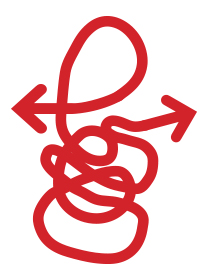
Complexity is an intrinsic part of life; it is normal and necessary, explains Norman (2011) in his book Living with Complexity. However, complexity is frequently pointed out as challenging and a product of our current society which makes communication and understanding harder. But is complexity the reason for poor sensemaking and misinformation design? Complexity is a…
-
Visualisations & the Process of Abstraction

When information is visualised it can take many forms from diagrams, maps, and information graphics to PPT presentations and wayfinding systems, to name a few. Any of those visualisations can support the processes of learning, teaching, managing information and communication, among others, but the visualisation of information does not always achieve that goal. This is…
-
Sensemaking Activities in Information Design

Information design is not only about visualising data or information. As written elsewhere, information design is about sensemaking. Sensemaking has been defined and studied by many authors. Most well-known theories and models are the works by Russell et al. (1993), Klein et al., (2007), and Pirolli and Card (2005). All describe the process as active, purposely…
-
10 Information Design Topics that Need Clarity

Countless information design articles and blog posts are written every day (too many to even name a few), prizes are given to award the quality of practice (e.g. Malofiej, IIID Awards, Information is Beautiful Awards), conferences are increasingly being organised by different institutions approaching the field from various angles (e.g. 2CO, Visualized, IDA Conference, Schematic…
-
Understanding Disinformation Design
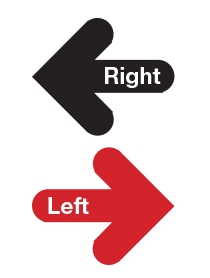
Much has been written about the recurrent creation of visualisations which fail to enhance communication and understanding, and prioritise the process of creation and visual languages over the presentation of accurate and informative content. A while ago, I was reading (again) the book Visual Explanations (Tufte, 1998) and came across a concept I didn’t remember…
-
A Spiritual Approach to Information Design

If we have a closer look to information design, we will see some interesting parallelisms and strong conceptual links with the practice of Yoga (yes, Yoga). The same way information design goes beyond the creation of visual solutions, the practice of yoga entails much more than stretches and strengthening the body. In previous posts, I…
-
An Ethnographic Information Design Approach
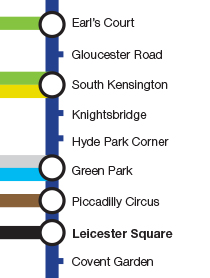
Commuting at rush hour can be a headache, but it can be a rich learning experience too. Paradoxically, although I have been closely working with the London diagrammatic map for a long time, I have never enjoyed using the tube or other public transport (when possible, walking is a better option). So, when I started…
-
Who are the experts

Many people argue that the more skills and professional practice experience information designers have, the more effective sensemakers they are. This is often a crucial requisite that employers (clients, organisations, etc.) consider when selecting or hiring one professional (e.g. designer) over another. However, being an expert information designer involves various other factors as well (here…
You must be logged in to post a comment.